

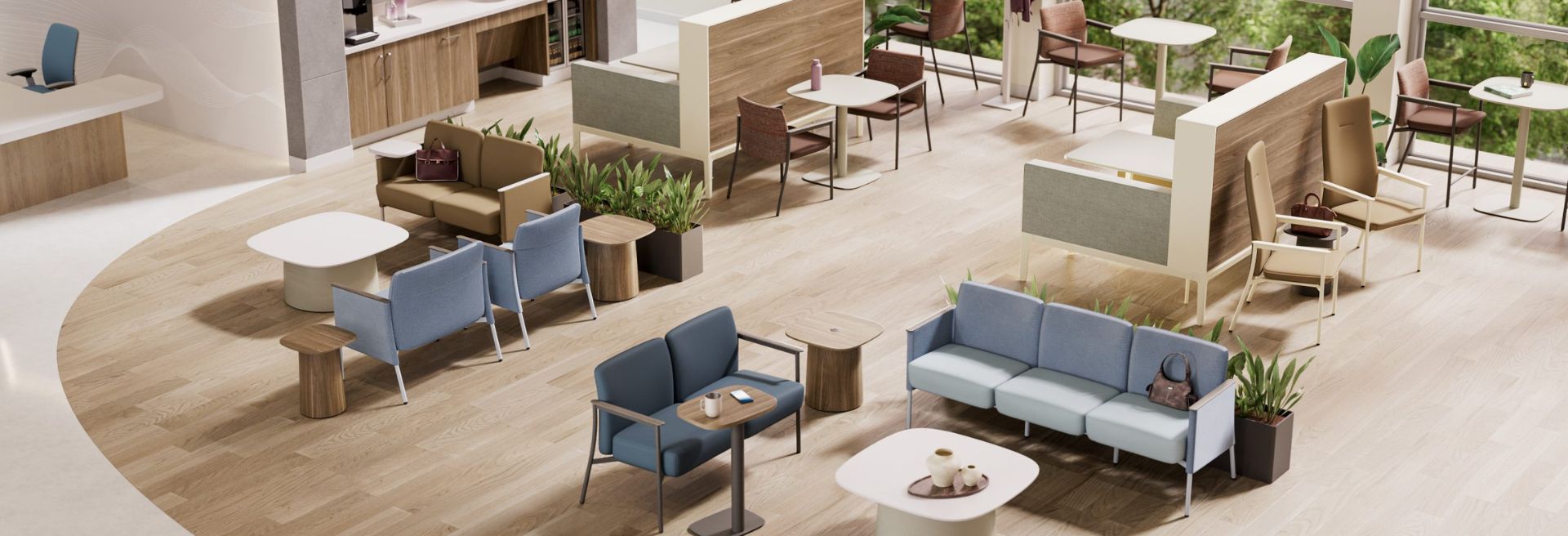
Healthcare environments are undergoing a meaningful transformation. Once defined by sterile, harsh lighting and finishes, today’s healthcare interiors are being reimagined through a more human-centered lens. Designers, providers and administrators increasingly recognize that the built environment plays a critical role in healing — not just physically, but emotionally and psychologically. The result is a shift toward spaces that prioritize comfort and dignity, while integrating trauma-informed principles that reduce stress and promote overall well-being. At the core of this evolution is a simple but powerful idea: Healthcare design should care for the whole person.
Moving beyond clinical aesthetics.
Traditional healthcare design has long emphasized efficiency, cleanliness and durability. While these elements are critical, they historically came at the expense of warmth and connection. As a result, many of the traditional interior elements — including stark, institutional furniture and impersonal waiting areas — reinforced anxiety rather than alleviating it.
Today, that approach is changing. Designers are intentionally incorporating softer materials, natural light, biophilic elements and more residential-inspired aesthetics to create environments that feel less intimidating and more supportive. The goal is not to disguise the clinical nature of healthcare, but to balance it with a sense of comfort and familiarity.
This shift reflects growing research showing that environment directly impacts patient outcomes. Reduced stress levels can lead to faster recovery times1, improved patient outcomes and even better staff performance and satisfaction2. Design is not relegated to a space’s appearance — it is a strategic tool for patient care.
The rise of trauma-informed design.
A significant driver behind this transformation is the adoption of trauma-informed design principles. Trauma-informed spaces acknowledge that many patients — and even staff — may carry experiences of stress, fear or trauma into healthcare environments. These spaces aim to minimize triggers and create a sense of safety and trust.
Key elements of trauma-informed design include:
- Clear wayfinding: Reducing confusion and anxiety through intuitive navigation
- Privacy options: Offering both open and secluded spaces to accommodate different comfort levels
- Soft acoustics: Minimizing noise to reduce overstimulation
- Calming color palettes: Using warm, muted tones instead of harsh contrasts
- Choice and control: Allowing patients to adjust lighting, seating or positioning where possible
These considerations extend beyond patient rooms into waiting areas, corridors and staff spaces. By addressing the emotional experience of healthcare, organizations can foster environments that feel more compassionate and inclusive.
Designing for connection & community.
Another defining characteristic of human-centered healthcare design is its emphasis on connection. Healing does not happen in isolation. Family members, friends, caregivers and healthcare professionals all play a role in the patient experience. Modern healthcare spaces are increasingly designed to support these relationships. For example, lounge-like waiting rooms and patient rooms may feature flexible seating arrangements, making it more comfortable for patients to receive visitors.
Staff spaces are also receiving renewed attention. Burnout remains a significant challenge in healthcare, and the environment can either contribute to or alleviate that strain. Dedicated respite areas, access to natural light, and thoughtfully designed workstations can help staff recharge and maintain focus.
By designing for connection, healthcare environments become more than places of treatment — they become spaces of support.
The role of furniture in human-centered design.
As one of the most immediate ways patients interact with a space, furniture plays an essential role in shaping an individual’s healthcare experience. Furniture in a clinical environment must be able to withstand rigorous cleaning protocols, heavy use and strict safety standards, so the challenge often lies in balancing durability requirements with a welcoming aesthetic.
This is where thoughtfully designed collections, such as the Apprise seating line from Steelcase Health, come into focus.
Spotlighting the Apprise Collection by Steelcase Health.
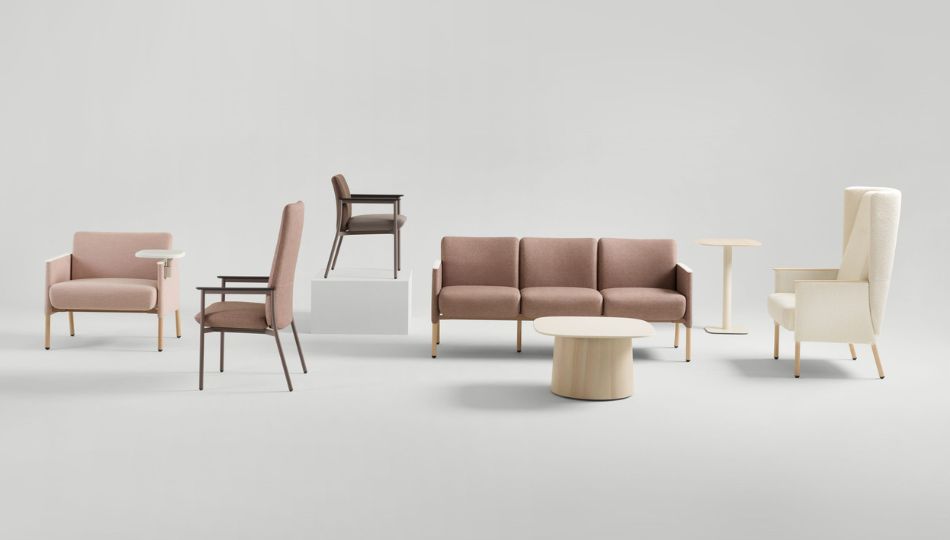
The Apprise collection represents a new approach to healthcare seating — one that blends performance with comfort and visual warmth. Designed specifically for medical environments, the collection addresses the complex needs of patient care rooms, waiting areas and clinics without sacrificing design integrity.
At its core, Apprise is built for durability. Materials are selected to withstand frequent cleaning and disinfecting, ensuring compliance with healthcare standards, while being designed to support long-term use in high-traffic environments.
However, what sets the collection apart is its attention to the human experience. The seating is designed with comfort in mind, offering supportive forms that accommodate a wide range of users — from patients to family members to staff. The aesthetic leans toward a more residential feel, helping spaces feel less institutional and more approachable.
The versatility of the Apprise collection allows it to adapt to different settings within a healthcare environment. In waiting rooms, it contributes to a more relaxed and welcoming atmosphere; in patient rooms, it supports both rest and interaction; and, in clinics, it balances efficiency with comfort.
This alignment of function and feeling is essential in modern healthcare design. Furniture is no longer just a utility. It is part of the care experience.
Supporting wellness through healthcare design.
Human-centered healthcare design ultimately aims to support wellness in its broadest sense., including physical healing, emotional comfort and mental clarity.
Natural light, access to nature and thoughtful spatial planning all contribute to this goal. So does the integration of flexible, adaptable elements that respond to changing needs. As healthcare continues to evolve — with shifts toward outpatient care, telehealth and community-based services — environments must be able to adapt accordingly.
Wellness extends to everyone within a healthcare space. This includes just patients, but also families and loved ones, staff and medical professionals, all of whom benefit from environments that promote a sense of ease.

Looking ahead.
The future of healthcare design will continue to build on these principles. As research deepens and expectations shift, organizations will place even greater emphasis on environments that reflect empathy, inclusivity and adaptability.
Technology will play a role, but it will not replace the need for human-centered thinking. The most effective healthcare spaces will be those that seamlessly integrate advanced systems with thoughtful design to create environments that feel supportive.
The movement toward a culture of care is not a trend. It is a fundamental shift in how healthcare is delivered and experienced.
By prioritizing people — their emotions, their needs and their well-being — healthcare design has the power to transform not just spaces, but outcomes. And as solutions like the Apprise collection demonstrate, even the smallest details can make a meaningful difference in how care is felt and received.
Sources: